Newsletter Subscribe
Enter your email address below and subscribe to our newsletter

 ByJohn A
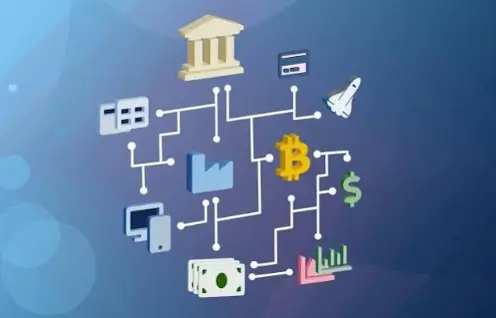
Decentralized finance (DeFi) enables financial services without central intermediaries, leveraging public blockchains and smart contracts. It replaces trusted middlemen with programmable code, enabling lending, trading, and governance across borderless markets. Core components include liquidity pools and decentralized exchanges, supported by cross-chain tools and yield strategies—with inherent risks requiring disciplined risk frameworks, testnet drills, and monitored dashboards. A prudent approach balances opportunity with resilience and exits strategies, inviting careful consideration of how permissionless finance reshapes traditional finance models.
DeFi, or decentralized finance, refers to financial services built on blockchain networks that operate without central intermediaries.
The framework enables decentralized lending, tokenized collateral, and governance markets that align participant incentives.
Yield strategies optimize returns, while cross chain bridges facilitate asset mobility.
Insurance protocols provide risk protection, underpinning trust and resilience in permissionless ecosystems essential for freedom-oriented, borderless finance.
See also: Understanding Crypto Wallets for Beginners
Public blockchains underpin DeFi by providing the open, programmable layer where financial protocols operate without centralized control. This framework enables transparent, autonomous interactions across public networks, with costs shaped by transaction fees and network demand.
Smart contracts, liquidity pools, and decentralized exchanges (DEXs) constitute the core building blocks of decentralized finance. The analysis isolates programmable trust, automated liquidity allocation, and borderless trading mechanics, highlighting efficiency gains and risk vectors. Smart contracts codify protocols; liquidity pools enable capital turnover; DEXs provide peer-to-peer execution with transparency. This framework informs strategic deployment while preserving freedom, efficiency, and interoperability for diverse users.
Safely entering DeFi requires a structured risk and controls framework that disciplines initial exposure, verifies protocol reliability, and establishes prudent operating parameters.
In sum, DeFi represents a measured evolution of financial architecture, where trust shifts to code, incentives, and open networks. Its allure rests on efficiency and permissionless access, though subtle frictions—liquidity sensitivity, protocol risk, and cross-chain frays—require disciplined vigilance. With robust risk frameworks and tested playbooks, participants can navigate the terrain more predictably, balancing ambition with prudence. The path forward favors incremental, well-audited deployments over expansive, speculative leverage.